
Key Takeaways:
- A pregnancy ingredient safety app can help you identify which skincare and cosmetic ingredients are generally considered safer during pregnancy.
- Ingredient checkers help you avoid or minimize exposures to flagged ingredients — without the overwhelm of decoding labels yourself.
- Little Bean‘s pregnancy-safe ingredient checker gives you clear, evidence-based context on what’s in your products — no chemistry degree required.
Pregnancy brings an entirely new level of awareness to the everyday products you use — from moisturizers to shampoos. Many expecting mothers quickly realize how difficult it is to determine what’s genuinely pregnancy-safer.
Research shows that pregnant women are exposed to many environmental chemicals, including some associated with personal care products. Yet ingredient labels are often hard to read, safety guidance is inconsistent, and there’s a gap between what’s marketed as “natural” or “clean” and what’s actually supported by evidence.
Little Bean is designed to help. As a pregnancy-safe ingredient checker app, it simplifies complex labels, reduces anxiety, and helps you make confident, evidence-based choices. Understanding why these tools matter is the first step toward pregnancy-safer daily routines.
Little Bean is an educational tool and is not a substitute for medical advice. Always consult your healthcare provider or a qualified clinician for personalized guidance during pregnancy.
Reviewed with input on ingredient safety from Pauline Lelandais, PhD, reproductive toxicologist.
Why Are Pregnancy Ingredient Safety Apps Important?
Pregnant women are exposed to many chemicals each day through skincare, haircare, and personal care products — many of which lack clear pregnancy safety data.
It’s no surprise that many expectant mothers worry about ingredient safety. Yet most labels are hard to interpret, and safety information is inconsistent or incomplete, leaving parents unsure about what’s genuinely pregnancy-safer.
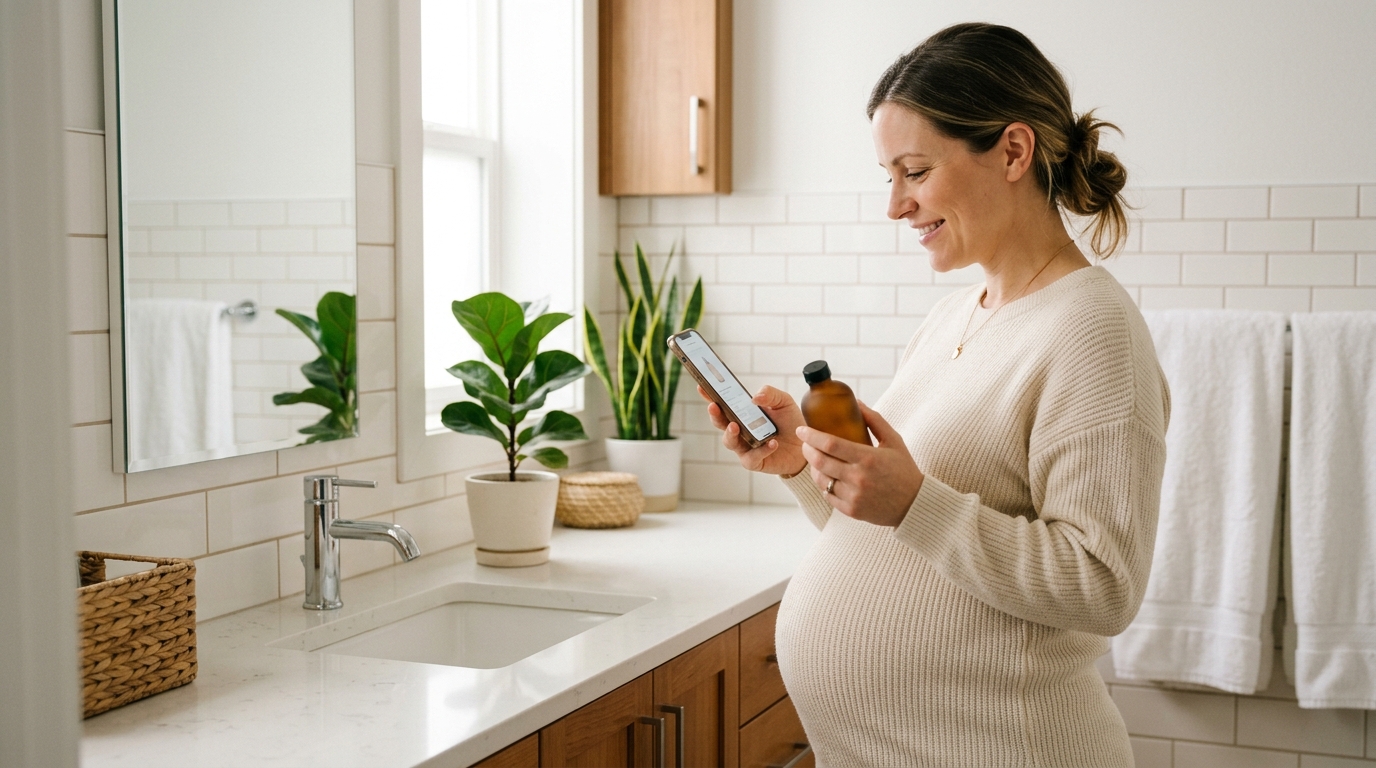
Pregnancy ingredient safety apps help bridge this gap. By translating complex ingredient science into plain-language guidance, they give expecting and nursing mothers quick, confident answers — right when they need them most. For a step-by-step walkthrough, see how to use Little Bean’s ingredient scanner.
How Do Pregnancy Ingredient Safety Apps Empower Expectant Mothers?
Pregnancy often brings a mix of excitement and uncertainty — especially when you’re suddenly evaluating every lotion, serum, or personal care product through a new lens.
Ingredient safety apps like Little Bean help by providing expectant mothers with research-driven, accessible information right when they need it. Instead of spending hours cross-checking ingredients, googling or relying on vague marketing claims, you can instantly understand what each product contains and how it aligns with pregnancy safety guidelines.
These tools take real mental load off expecting parents by filling in the gaps that labels and marketing often leave behind:
- They highlight which ingredients are generally considered okay — and which ones you might want to reconsider for now
- They make decisions about skincare and personal care feel less overwhelming
- With evidence-based context at your fingertips, you can feel more prepared and more in control of what you and your baby are exposed to
- The goal is context, not alarm — so you can make informed decisions with less stress.
Addressing Regulatory Gaps With Safety Apps
Many people are surprised to learn how cosmetic regulation works in the U.S.
In the U.S., most cosmetic products and ingredients do not need FDA premarket approval before being sold, with the exception of color additives. Cosmetic companies remain responsible for marketing safe, properly labeled products. For expectant mothers, who may be more sensitive to certain exposures, understanding this context matters when evaluating personal care products.
Ingredient lists may also use umbrella terms like “fragrance,” which can cover dozens of undisclosed chemicals. Without mandatory premarket testing requirements for most cosmetics, consumers can have limited insight into what they’re actually putting on their skin.
This is where third-party tools matter. Pregnancy-focused safety apps like Little Bean offer independent, evidence-based ingredient evaluations — helping expectant mothers make more informed choices with context rather than alarm.
Ensuring Information Accuracy and Scientific Credibility
Not all pregnancy apps are created equal, and when it comes to ingredient safety, scientific rigor matters.
Research on pregnancy apps has found that some apps lack credibility, evidence-based clinical guidance, or expert involvement, which makes transparency and scientific review especially important.
Little Bean’s ingredient database is reviewed with input from a qualified toxicologist, Pauline Lelandais, PhD. The best tools lean on peer-reviewed research, established safety guidelines, and real experts — not automated algorithms alone.
When information is reviewed by toxicologists, dermatologists, or maternal health specialists, you can feel more confident that the guidance reflects real science, not marketing claims.
How Do Pregnancy Ingredient Safety Apps Support Maternal and Baby Health?
Ingredient safety apps can play a meaningful role in supporting healthier everyday routines during pregnancy by making choices clearer and less stressful.
Maternal health includes physical and mental well-being during and after pregnancy. Skincare ingredients and personal care product exposures can all be part of that picture — and having clear, evidence-based guidance can help reduce the anxiety that comes with so many unknowns. Many users reach out feeling stressed after realizing they used a product they are unsure about during early pregnancy.
Quick, trusted guidance can help lower decision fatigue. Knowing what’s in your products — and what to be cautious about — can help you make more informed choices. With Little Bean, you can:
- Scan any ingredient list, whether on a bottle or a retailer’s website, and instantly see any flagged ingredients
- Review evidence-based guidance and understand why an ingredient may be worth reconsidering during pregnancy
- Feel more equipped to discuss specific products with your healthcare provider
Have more questions? Visit our pregnancy-safe skincare FAQ.
What To Look for in a Pregnancy Ingredient Safety App
A great pregnancy ingredient safety app should make product checking fast, accurate, and stress-free. Here’s what to prioritize:
| Essential Features | Nice-to-Have Features |
| Ingredient label scanning | Helpful tips for flagged ingredients |
| Ingredient list uploads | Personalized routine tracking |
| Evidence-based risk ratings | Pregnancy-safer product suggestions |
| Regular database updates | Shopping list tools |
| Research citations | Community support forums |
| Quick ingredient overviews | Copy/paste for ingredient lists |
The Bottom Line
Finding pregnancy-safer skincare shouldn’t feel like a chemistry exam. Little Bean is a pregnancy-first ingredient checker designed to give you clear, evidence-based answers about what you’re putting on your skin.
Instead of decoding labels or Googling every ingredient, you can simply scan, upload, or paste an ingredient list to get an instant assessment. In seconds, the app reviews each ingredient and returns easy-to-understand context — generally considered safer, use with caution, or worth reconsidering for now — along with plain-language notes explaining why.
Little Bean’s ingredient database is built from leading medical, regulatory, dermatology, and toxicology sources, with input from Pauline Lelandais, PhD. Our goal is to give you accurate, up-to-date information you can actually trust — so you can enjoy your routine with greater peace of mind during this important time.
FAQs
Why is ingredient safety important during pregnancy?
Certain substances found in cosmetics and personal care products may interact with hormonal or developmental processes during pregnancy. Many ingredients lack clear pregnancy safety data, and some stages of pregnancy — particularly the first trimester, when many of the baby’s organs are forming — are considered especially important to minimize unnecessary exposures. Using an ingredient safety app can help you identify which ingredients are generally considered safer and which ones are worth discussing with your healthcare provider.
How can a pregnancy ingredient safety app help with skincare and cosmetics?
Apps like Little Bean provide instant, evidence-based context on product ingredients, helping expectant mothers quickly identify which items are generally considered pregnancy-safer or worth reconsidering. Instead of manually researching each ingredient, you can scan, paste, or upload a product’s ingredient list for immediate guidance — making everyday product decisions faster and less stressful.
Can Little Bean replace medical advice?
No. Little Bean is an educational tool, not a medical device or healthcare provider. It offers general ingredient guidance based on current scientific evidence. For personalized recommendations — especially relating to your health history or specific pregnancy concerns — always consult your OB-GYN, midwife, dermatologist, or other qualified clinician.
What types of products can Little Bean help evaluate?
Little Bean is designed for skincare, cosmetics, and personal care products — including moisturizers, serums, sunscreens, foundations, shampoos, conditioners, hair dyes, and body lotions. If a product has an ingredient list, Little Bean can help you assess it. The app is not designed to evaluate medications, supplements, or food products.
How does Little Bean review ingredient safety?
Little Bean’s ingredient database is reviewed with input from Pauline Lelandais, PhD, a reproductive toxicologist who draws on peer-reviewed scientific literature and guidance from leading bodies including the NIH, ACOG, and the European Medicines Agency. The goal is to translate complex toxicology findings into clear, accessible safety context — without unnecessary alarm.
Sources:
Cumulative Chemical Exposures During Pregnancy and Early Development | NIH
Study of Pregnant Women Finds Increasing Chemical Exposure | UC San Francisco
FDA Authority Over Cosmetics | U.S. Food and Drug Administration
What is fragrance? | Environmental Working Group
Skin Conditions During Pregnancy | American College of Obstetricians and Gynecologists (ACOG)
Clinical Pharmacology & Pharmacokinetics Guidelines | European Medicines Agency (EMA)